From Stardoll to Infinity Nikki, dress-up games remain a cultural phenomenon. Explore the psychology, creativity, and community that keep millions playing.
June 2, 2026 · 9 min read
TL;DR
Dress-up games have remained a cultural phenomenon for over 20 years-from early browser-based Flash games to today’s 100-million-download mobile franchises. Players love them because they’re judgment-free spaces for creative expression, require zero gaming experience to enjoy, and build genuine community around fashion and aesthetics. The genre has evolved from mobile-only to console platforms, integrated narrative-driven fashion choices, and now serves everyone from kids discovering their style to adults seeking meditative, low-pressure fun. In 2026, dress-up games online remain one of gaming’s most accessible and psychologically rewarding subgenres.
What are dress-up games?
Dress-up games are deceptively simple: you select clothing, hairstyles, makeup, and accessories, then combine them on an avatar to create a look. That’s the core mechanic. But the genre’s staying power comes from what surrounds that mechanic-the progression systems, social layers, and creative freedom that transform a basic customization tool into a meditative, expressive experience.
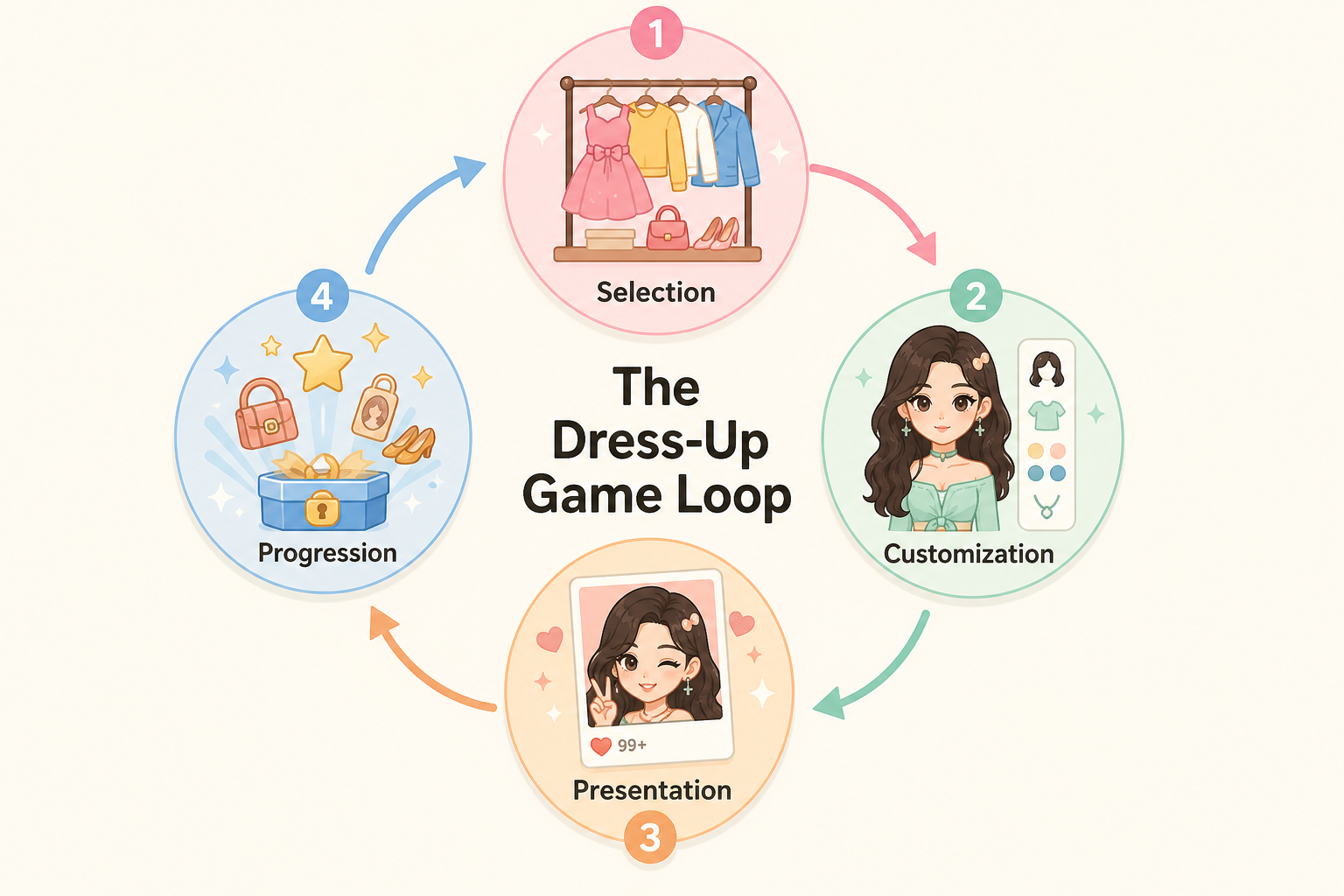
The gameplay loop is consistent across titles:
- Selection – Browse an unlocked or purchasable wardrobe
- Customization – Combine items on your avatar
- Presentation – Display your finished look to yourself or others
- Progression – Unlock new items through play, currency, or social interaction
More sophisticated titles layer in farming mechanics (grinding resources to unlock items), narrative choices that reward fashionable decisions, or ranking systems where outfits compete for community votes.
A brief history
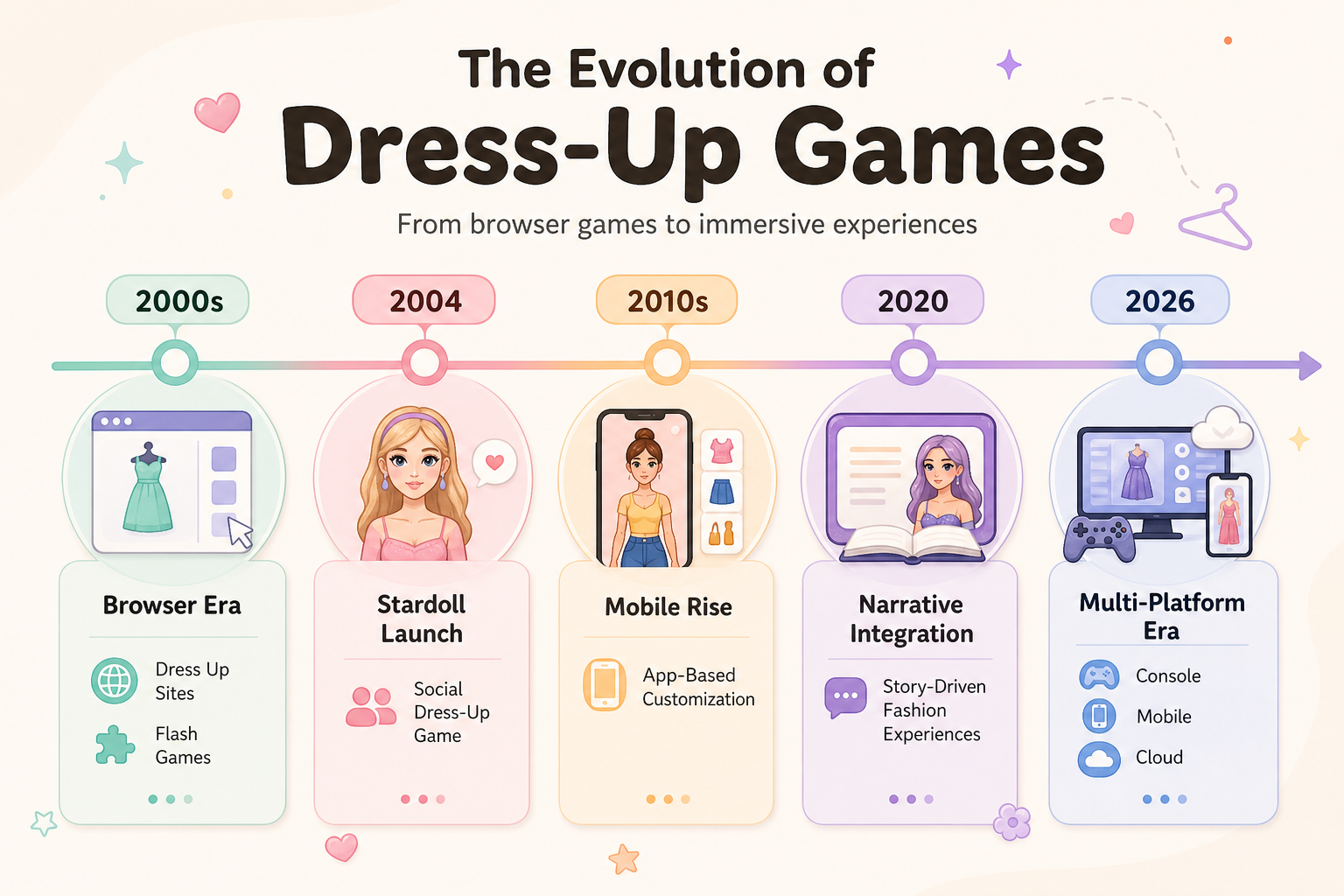
Dress-up games emerged as a recognizable genre in the early 2000s when Flash-enabled browsers made browser-based gaming accessible to anyone with an internet connection. Dedicated dress-up sites proliferated, and Stardoll launched in 2004, becoming the defining franchise of the era. Millions of players built virtual fashion empires, shopped in digital malls, and voted on community outfits-all without leaving their browser.
Mobile’s rise in the 2010s diversified the genre. Infinity Nikki and its predecessors brought high-production-value graphics and narrative depth. Console releases like Fashion Dreamer signaled the industry’s recognition that customization and creative expression were worth AAA-level investment. Today, even competitive franchises-Warframe, Pokémon, Sea of Thieves-include elaborate dress-up minigames because they drive engagement.
The numbers tell the story: Infinity Nikki surpassed 100 million downloads and earned an Apple Design Award. GameDeveloper.com lists 738 search results for dress-up game content. The genre isn’t niche-it’s mainstream.
Why they appeal across every age group
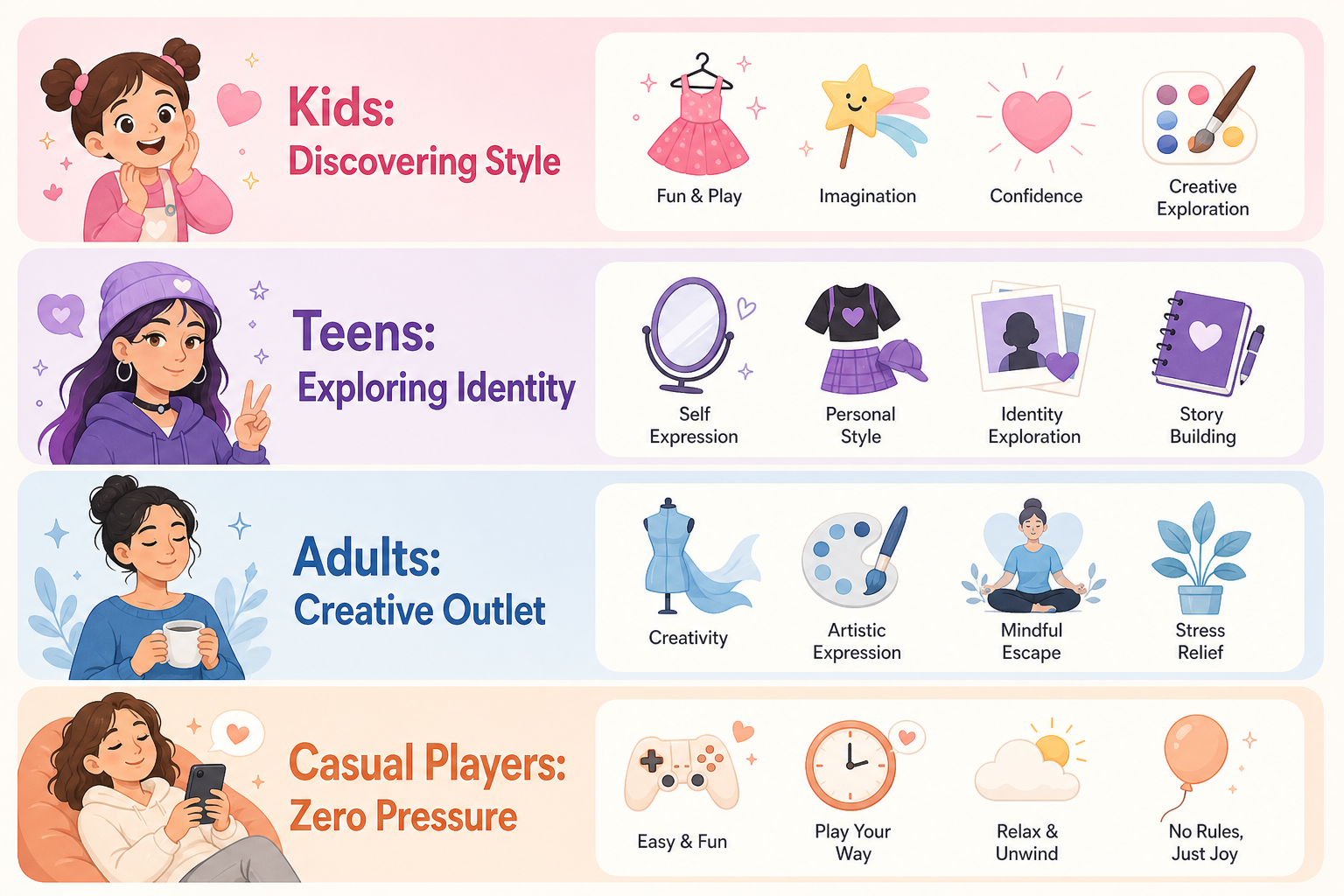
The appeal is psychological, not mechanical. Dress-up games offer a judgment-free zone for aesthetic experimentation. Kids use them to discover what they like before spending money on real clothes. Teens explore identity through avatar design. Adults describe the experience as therapeutic-a meditative break where the only goal is creating something visually pleasing.
Creative expression without judgment
The appeal is psychological, not mechanical. Dress-up games offer a judgment-free zone for aesthetic experimentation. Kids use them to discover what they like before spending money on real clothes. Teens explore identity through avatar design. Adults describe the experience as therapeutic-a meditative break where the only goal is creating something visually pleasing.
There’s no combat, no time pressure, no leaderboard shaming. You can’t fail at looking good. That psychological safety is rare in gaming and irreplaceable.
Zero barrier to entry
Dress-up games require no prior gaming experience. Selecting items and matching colors is intuitive from age five upward. You don’t need to understand game mechanics, keybind remapping, or genre conventions. This accessibility made dress-up games the gateway to gaming for entire demographics that other genres never reached.
Compare that to a typical action game: steep learning curve, mechanical skill required, competitive stakes. A dress-up game asks nothing but your eye for color and your imagination.
Community and social validation
Many dress-up games embed social mechanics where players share outfits and others vote or comment. Stardoll’s voting system, for instance, created a feedback loop: you design an outfit, the community votes, you earn currency, you unlock new items, you design again. Suddenly the game is social-you’re designing for an audience, competing (in a low-stakes way) for recognition, and returning daily because your peers are there.
This transforms a solo activity into shared cultural play. The outfit vote becomes a reason to log in, a conversation starter, a form of expression that extends beyond the game.
The creative and fashion elements driving engagement
Wardrobe scarcity and unlocking
Successful dress-up games balance abundance with scarcity. A wardrobe of 50 items lets you make genuine choices; a wardrobe of 500 feels infinite but can paralyze. Rare drops, limited-time seasonal items, and cosmetic tiers create motivation to play daily or invest in premium currency.
The psychological power of “unlocking” something is well-studied. Dress-up games exploit this brilliantly: each login brings a new item, each seasonal event brings exclusive looks, each rank milestone brings new options. Players return because the wardrobe feels alive and rewarding.
Aesthetic themes and coherence
Games that organize wardrobes into themed collections-Retro 80s, Cottagecore, Cyberpunk, Y2K Revival-let players build cohesive looks instead of randomizing. Infinity Nikki’s success with retro-pop-themed events shows players want to construct stories with their outfits, not just throw items together.
Thematic wardrobes tap into broader fashion cycles. When cottagecore trends on social media, games that offer cottagecore items see spikes in engagement. The games become mirrors of real-world fashion consciousness.
Color theory as game mechanic
Advanced titles introduce color-matching bonuses: certain color combinations earn you extra currency or unlock special effects. This gamifies fashion theory and makes aesthetic decisions feel mechanically meaningful. Choosing between a blue that “matches” versus a blue that “contrasts” isn’t just visual-it’s a gameplay decision with tangible rewards.
Popular styles: the fashion that dominates dress-up games
Fantasy and magical girl aesthetics
One of the highest-engagement categories, especially for younger players. Fairy wings, enchanted jewelry, flowing gowns with sparkles-the aesthetic of fantasy and magical girl anime dominates this space. The appeal is escapism: for a few minutes a day, you can be a sorceress or a woodland fairy.
Celebrity and pop culture
Games that license real celebrities or popular franchises attract both casual players (who recognize the names) and deeply invested fans (who want to mimic exact outfits). Celebrity-licensed dress-up games drive engagement through recognition and aspiration.
Retro pop and nostalgia
Infinity Nikki’s explosive growth was partly driven by retro-pop events-80s neon, Y2K revival, early-2000s browser-game aesthetics. These tap into generational nostalgia and broader fashion cycles. Players in their 20s and 30s see outfit-building as a chance to recreate the aesthetics they grew up with.
Realistic and aspirational fashion
Some games emphasize high-fashion looks: designer brands, runway aesthetics, luxury wear. These appeal to older teens and adults exploring aspirational style. The game becomes a way to window-shop, to imagine what those outfits feel like, without the price tag.
Anime and East Asian aesthetics
Strong representation across mobile and indie titles. Anime-inspired customization-eyes, hairstyles, school uniforms, magical girl outfits-appears in almost every major dress-up title. This reflects both anime’s global popularity and the high player overlap between anime communities and dress-up communities.
The community: where fashion becomes culture
Player-driven content and sharing
Dress-up communities thrive on sharing. Players post outfit screenshots on TikTok, Instagram, Reddit, and game-specific forums. Styling challenges (“design an outfit under 1000 coins,” “cottagecore only”) create collaborative play even in single-player games.
The most vibrant communities organize around challenge themes, seasonal events, and trending aesthetics. A new seasonal cosmetic set can spark weeks of community styling discussions.
Competitive styling without aggression
Voting systems and styling contests create competition, but the low stakes keep it friendly. Losing a vote doesn’t diminish your avatar or your progression-it’s a peer opinion, not a ranking. This allows competitive engagement without the toxicity that plagues high-stakes gaming communities.
User-generated content and the long tail
The most sophisticated titles permit player-created content: custom items, custom color palettes, or shared outfit templates. Games like Doll Divine, which let independent creators publish custom dress-up titles, extend the genre’s lifespan indefinitely. The player base becomes the content creator.
Where to play: major platforms and games
| Game / Platform | Launch Year | Style | Key Appeal |
|---|---|---|---|
| Stardoll | 2004 | Avatar customization + virtual real estate | The classic; massive wardrobe, strong social layer, millions of players |
| Infinity Nikki | 2023 | High-production fashion game | 100M+ downloads, narrative-driven, seasonal events, multi-platform |
| Fashion Dreamer | 2024 | Console-native dress-up | Retro-pop aesthetic, console-first design, modern crafting mechanics |
| Doll Divine | ~2008 | User-created games | Community-driven, browser-based, infinite custom content |
| Warframe (cosmetics layer) | 2013 | Sci-fi character customization | Free-to-play shooter with extensive cosmetics; dress-up minigame within larger game |
| Pokémon Sword & Shield (apparel) | 2019 | Character clothing in RPG | Embedded dress-up system; mainstream franchise reach |
| Sea of Thieves (cosmetics) | 2018 | Pirate customization | Live-service pirate game with deep cosmetic progression |
Why dress-up games still matter in 2026
A counter-current to competitive gaming
The gaming landscape is dominated by competitive titles: battle royales, ranked multiplayer, esports ecosystems. Dress-up games offer a fundamentally different value proposition: zero competition, zero pressure, pure creative expression.
This counter-current appeal is only growing. As competitive gaming’s toxicity and burnout become more visible, players-especially younger and more casual audiences-seek low-pressure alternatives. Dress-up games fill that niche perfectly.
Accessibility as a superpower
When a game requires no prior gaming experience, no mechanical skill, and no time commitment, it reaches audiences that conventional games exclude. Dress-up games onboard players who’ve never played a game before. That’s a market no other genre taps as effectively.
Fashion as a genuine interest
Fashion is a $2+ trillion global industry. Players invest time and money into real-world clothing because self-expression matters. Dress-up games digitize that same human need. They’re not novelty experiences-they’re avenues for expressing genuine interests in fashion, aesthetics, and identity.
Mental health and creative wellbeing
Increasingly, players describe dress-up games as therapeutic. The meditative act of customizing, the pride in a finished look, the social feedback from a community-these contribute to wellbeing in ways competitive gaming rarely does. As awareness of gaming’s mental health impact grows, the appeal of low-stakes, creative experiences only strengthens.
Looking forward
Dress-up games have survived 20+ years by doing one thing exceptionally well: letting players express themselves without judgment. Each era has added new dimensions-social voting, narrative integration, cross-platform play, cosmetic sophistication-but the core appeal remains constant.
The genre’s resilience is remarkable. Most gaming trends spike and fade. Dress-up games quietly persist, evolving with platforms and player preferences, accumulating hundreds of millions of cumulative players across thousands of titles.
In 2026, that trend shows no sign of slowing. If anything, the shift toward casual gaming, the backlash against toxicity, and the universal human need for creative expression suggest dress-up games online will remain a cultural constant-not because they’re trendy, but because they fulfill something fundamental about play.
Frequently Asked Questions
What exactly are dress-up games online?
Dress-up games are casual games centered on character customization and fashion expression. Players select clothing, hairstyles, makeup, and accessories to create unique avatar looks. They range from dedicated titles like Stardoll to fashion minigames embedded in major franchises like Pokémon Sword & Shield or Warframe. The focus is creative self-expression rather than competition.
Who plays dress-up games and why?
Dress-up games appeal across all age groups: children discovering style preferences, teens exploring identity, and adults seeking creative outlets or meditative breaks. Players cite therapeutic value, social connection, and the freedom to experiment with aesthetics without judgment or cost barriers. The low barrier to entry makes them accessible to anyone, regardless of gaming experience.
How do dress-up games make money?
Most dress-up games use cosmetic-only monetization: premium currency lets players purchase aesthetic items, but gameplay isn’t gated behind paywalls. This approach aligns with player satisfaction and differentiates dress-up games from pay-to-win mechanics. Progression is unlocked through play, social interaction, or optional cosmetic purchases.
Why has the genre stayed popular for over 20 years?
The enduring appeal stems from universal human needs: creative expression, social connection, and low-pressure fun. The genre has evolved from browser-based Flash games to 100M-download mobile franchises to AAA-adjacent console releases like Fashion Dreamer. Developers continue innovating with narrative integration, cross-platform play, and sophisticated cosmetic systems that keep the experience fresh.
What are the most popular dress-up games right now?
Top titles include Stardoll (the classic franchise with millions of players), Infinity Nikki (which surpassed 100 million downloads and won an Apple Design Award), and Fashion Dreamer (a modern console release). Many major franchises like Warframe, Sea of Thieves, and Pokémon also feature extensive character customization systems.